Outlaw Trail
The OutlawsThe Outlaw Trail is both a physical path across the frontier and a way of life defined by flight, danger, and uncertain return. Del Delaney takes to it after fleeing a rape charge he believes has been brought against him unjustly; The Kid and John Smith, by contrast, regard their past crimes as making continued outlawry nearly unavoidable. Their different motives and choices give the trail a double meaning: it promises escape from confinement, but can also become a road a person expects to ride to its end.
Flight from Montana
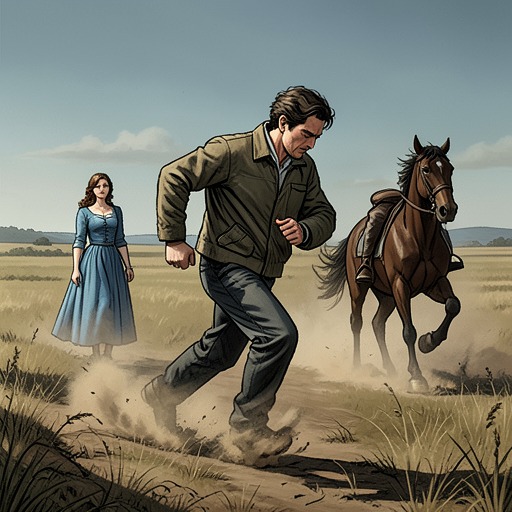
Del Delaney’s flight begins with the rape accusation made by Sid Blackwell, a deputy sheriff and Ruby Prentiss’s steady boyfriend. Because Blackwell’s father is the local judge, Delaney sees little reason to trust that remaining in town will lead to a fair outcome. He leaves by riding north as though bound for Wineglass, then turns southwest once he is out of sight, using the false direction to conceal his departure.
He continues across the state line into Wyoming, believing a Wyoming sheriff is less likely to pursue him than a Montana lawman. Rather than risk recognition in larger towns or county seats, he keeps away from them. His movement is not a single clean passage to safety: he sometimes lives on game he kills, but more often buys supplies at country stores as he drifts onward.
The Trail as a Cost of Freedom
Delaney’s journey takes place in late spring, amid rain and occasional snow. Cold and discomfort become part of the price he knowingly pays to avoid the Deer Lodge penitentiary. He measures the hardship of the trail against the prospect of a cell and chooses freedom, even while recognizing that escape has not given him a reassuring future.
That uncertainty distinguishes the trail from a simple route to a new life. Delaney has crossed into another state, but he remains a fugitive, avoiding places where official attention might find him and reflecting on what lies ahead. The trail provides distance from the law without resolving the accusation or removing the consequences that shape his choices.
Different Histories, Shared Exposure
The Kid gives the outlaw life a more deliberate and entrenched character. When Delaney considers leaving and finding riding work, The Kid answers that he has killed three men and held up, or helped hold up, six banks. He has spent most of his money gambling and the rest, he says, on women in Helena and Butte. His account presents a record of repeated crime, not merely a flight prompted by one disputed charge.
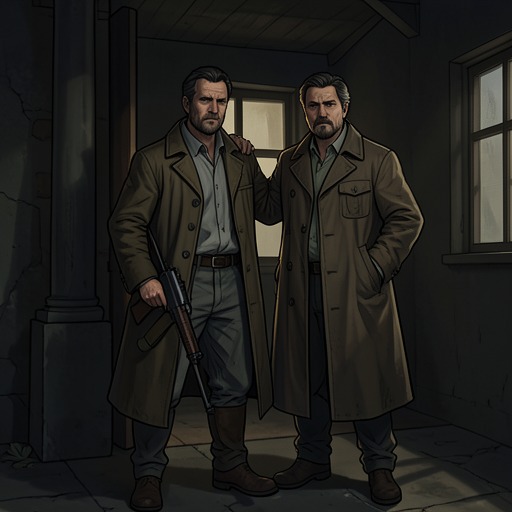
John Smith’s position is different again. He has helped The Kid rob one bank, which leaves him vulnerable to recognition, but he is also facing a first-degree murder charge back home. Delaney believes Smith could have a good chance of acquittal because the killing might be treated as justifiable homicide: in Delaney’s account, Smith had defended his home. The possibility of a legal defense separates Smith’s case from The Kid’s stated history, even as Smith regards the murder charge as something that cannot be changed.
A Road Without One Ending
The Kid insists that a man in their position cannot go back and must instead avoid being jailed. Delaney’s doubts expose the pressure beneath that claim: he still imagines that the charges against him might eventually be dropped if he commits no further crime. The disagreement makes the trail a conflict over agency as well as geography. The Kid treats outlawry as an irreversible identity; Delaney can still imagine stepping away from it.
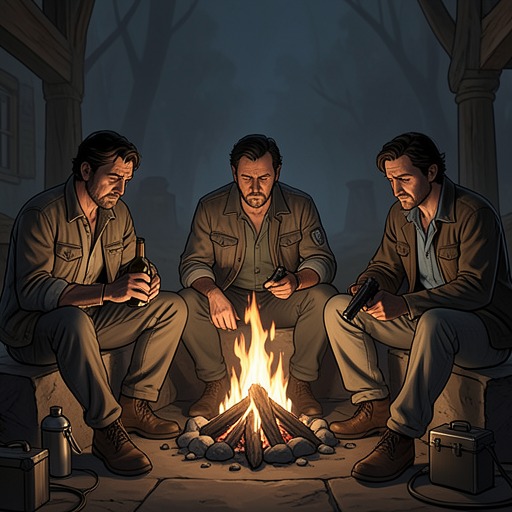
Near the end, Delaney sees The Kid’s eagerness for a fight and worries that it could bring the group into trouble and spoil their plans. He says nothing, believing The Kid obeys no voice but his own, and understands that this self-direction is why The Kid rides the Outlaw Trail and will keep riding it to the end. John Smith reaches the opposite decision: he says he will return home and face the consequences rather than keep running. The trail therefore does not dictate a single fate. It carries The Kid toward continued flight, while Smith’s announced return shows that even among wanted men, the choice to stop running remains possible.